I'm particularly displeased with the use of "identity" as a vague handwave for every kind of human variety, where it's at best irrelevant. What got me going was a gay male novelist interviewed on NPR this morning, who used "identity" to refer to being gay -- I think. He was saying that when he wrote about being a heavy substance abuser and going wild sexually in his teens, hating his body and himself, many readers told him that aside from the "details," they saw a lot of themselves in his character.
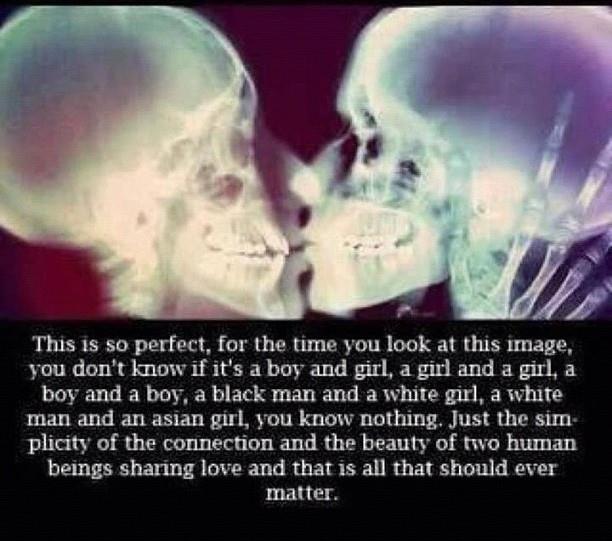
This interested me, because one of the favorite cliches of so many writers and their readers is that audiences want to see "someone who looks like them" in the entertainment they consume. I've been mulling this over for a long time now, first because many consumers will refuse to see themselves in a character because it doesn't represent them perfectly, or doesn't conform to what they wish they looked like. So, for example, gay men have demanded butch, buff, impossibly-hung, monogamous-but-slutty, rich gay male characters so they can see "someone who looks like them" in fiction, movies, and TV - even though that is damn well not what they look like. Consider the hostility many gay men and our allies have for Will and Grace's Jack McFarland, which I suspect is largely because he looks too much like them. This carries over to other human variations, but I'm speaking for my own category here. I think that what people want in entertainment is not really "someone who looks like me," but something else.
Yes, I am glad to see gay male characters in entertainment, but I admit I'm not sure what I expect from them. I was always interested in seeing gay love stories that ended happily, but it wasn't all I wanted, though I'm not sure what that was. What most people want from entertainment isn't all that clear. The popularity of superhero entertainment suggests to me that many of us want images of people who aren't like us, because they can do things we can't, fulfill fantasies of power that no one can carry out, even though they face the same obstacles that we do: being misunderstood, judged, kept from doing what we want to do. What does it say about audiences that so many people loved Hannibal Lecter as Anthony Hopkins played him in Silence of the Lambs? Did he "look like them"? In some ways I think he did: he gratified his every selfish wish with class and diabolical eloquence, authority couldn't restrain or hold him, and in the end he avenged himself on his enemy with a childish bon mot: "I'm having an old friend for dinner." I don't remember which reviewer called Lecter's character "infantile," which captures his indiscriminate egoistic orality. More than ever since Donald Trump's ascension, it's safe to say that Hannibal Lecter does "look like" a sizable chunk of America.

I don't mean to suggest that this is only characteristic of Donald Trump and his base, nor do I think it's what most people are thinking when they use that phrase. My point here is that it has little to do with how they, or the character, looks. But second, as this writer said, people find useful common ground with people who don't look like them, partly I think by blotting out differences and creating a mental simulacrum who looks more their wishful self-image. This may be easier to do in print, where we have to invent mental images of characters anyway. It would be interesting to ask some of those people why they identified with the character, how they thought he was like them.
Beyond that, as I've already suggested, consumers of entertainment are able to relate to characters they know very well are different from them: characters of a different sex, a different class, a different culture, and so on. Seeing the world through the eyes of someone one may have thought was The Other can be revelatory, but that we often do it without thinking is important to remember. As I've often said, "universality" is a mirage. No one is obligated to sympathize with a given character or situation, but one's ability to do it is not determined by the trivia of "identity." That the character is "not like me" is not an excuse, and is probably not the reason anyhow.
Let me stress: I'm not saying that it's not important to have gay characters, black or brown characters, female characters, et cetera, in entertainment or in art. I think that in the absence of overt censorship by the law or by marketing departments, such characters will turn up naturally (to use a problematic word), and will exhibit a reasonable amount of intra-group variety. There will be a problem with dominant-group refusal to empathize across the divides; it's notorious that males of all ages refuse to read work by women, or featuring female protagonists, for example. I'm not sure how to correct this, but it won't be helped by buying into the assumption that nobody will find interesting the stories of those who 'don't look like them.' For now, I would be perfectly comfortable guiding consumers (especially young ones) toward work that will make them comfortable, though also with guiding dominant-group consumers (especially young ones) toward work that features characters who don't look like them.
A few years ago I read a memoir by a writer much like (or was he?) this novelist: he was gay, spent several years in New York City drinking and drugging, screwing around frenetically, and building a career as a female impersonator. Eventually he sobered up, found a boyfriend, and moved to the country or at least the suburbs. I didn't enjoy the book or get much out of it: not because the author wasn't like me, but because his story was exhausting, repetitive, and not very interesting. I'm not judging him - well, yes, I am, but I find it difficult to understand people who seem to have no inner lives, nothing that gives them any meaning or satisfaction, and this memoir didn't shed any light on them. He's written a second book about his life as a homesteader/country squire, which I haven't read, but at least he stayed sober that long.
The writer NPR interviewed located the body issues mostly in his or his persona's weight, though apparently this didn't involve obesity, mainly it was in not having 0% body fat. The interviewer pressed him gently: why get so upset about being not obese but carrying a couple of extra pounds? He explained that it was a feeling of not belonging in his body. "Why did I have to be born in a body?" was his lament and his refrain. "Why couldn't I have been born in a haunted suit of armor or something?"
This also baffles me, though I'm familiar with what he's talking about. And yes, I know that the problem arises from something other than rational reflection, because it makes no sense. There is no "I" prior to the body: the body produces the "I." This illusion of inner division (is "dysphoria" the right word?) is widespread, and has found expression through religion and philosophy; I'll be forever grateful to the writings of Alan Watts and Dorothy Dinnerstein for pinpointing it and defusing it for me, because as a highly verbal intellectual I would have been vulnerable to it, but it has never bothered me much. Which doesn't mean I've been perfectly comfortable bodily, only that I've never tried to cut myself in half in this way.
It occurred to me that this dualism is part of the current doctrine of transgender: that human beings have a self that is separate from their bodies. For trans people, when the two come into conflict the self wins, but when other dysphoriae are involved, the self is expected to adjust to the body. I don't have any idea how to resolve this, but I think it should be noticed. People's distress is real and must be taken seriously, but I wonder how helpful false beliefs like dualism really are in dealing with them. I've wandered far afield from my original gripe, but "identity" is another fiction. It might be useful but has become meaningless through inflation and is frequently worse than useless as a result.